Bridging the gap between research and the public: the role of citizen scientists

A Streams of Thought contribution by Paola Mazzoglio and Miriam Bertola.

The potential of  citizen science in hydrology

Citizen scientists (i.e., volunteers who help conducting tasks in scientific research) have the potential to play an important role in hydrology. The main advantage of Citizen science initiatives is that they engage a broad range of individuals since no previous knowledge of the research topic is needed, including ordinary people, students, and educators, and both sides benefit from this collaboration. On the one hand, these initiatives are opportunities to disseminate scientific knowledge and awareness to the public about water-related challenges. On the other hand, citizens contribute to collective tasks that speed up scientific research.

The role of citizen scientists is generally the collection and the analysis of data on water resources or on some component of the water cycle, mainly in terms of quantity and quality. This includes taking measurements of streamflow, rainfall, water temperature, pH, dissolved oxygen, and other parameters using simple, low-cost tools such as meters, test kits, computers and smartphones. Citizen scientists can, for example, collect water samples for laboratory analysis, which provide information on nutrient levels, sediment loads, and the presence of contaminants. In addition to collecting data, citizen scientists can assist in analyzing and interpreting it.

Continue reading
Posted in News, Streams of Thought | Tagged , , , , | Comments Off on Bridging the gap between research and the public: the role of citizen scientists

EGU23 Short Course – Meet the editors (1): how to write and revise your manuscript

Preparing a manuscript for submission to a scientific journal may be hard work for many scientists. Still, scientific writing is an essential step of the research process, because the form used to present the results is often as important as the results themselves. Writing a scientific paper is a skill that can be acquired with time, while becoming easier with practice.

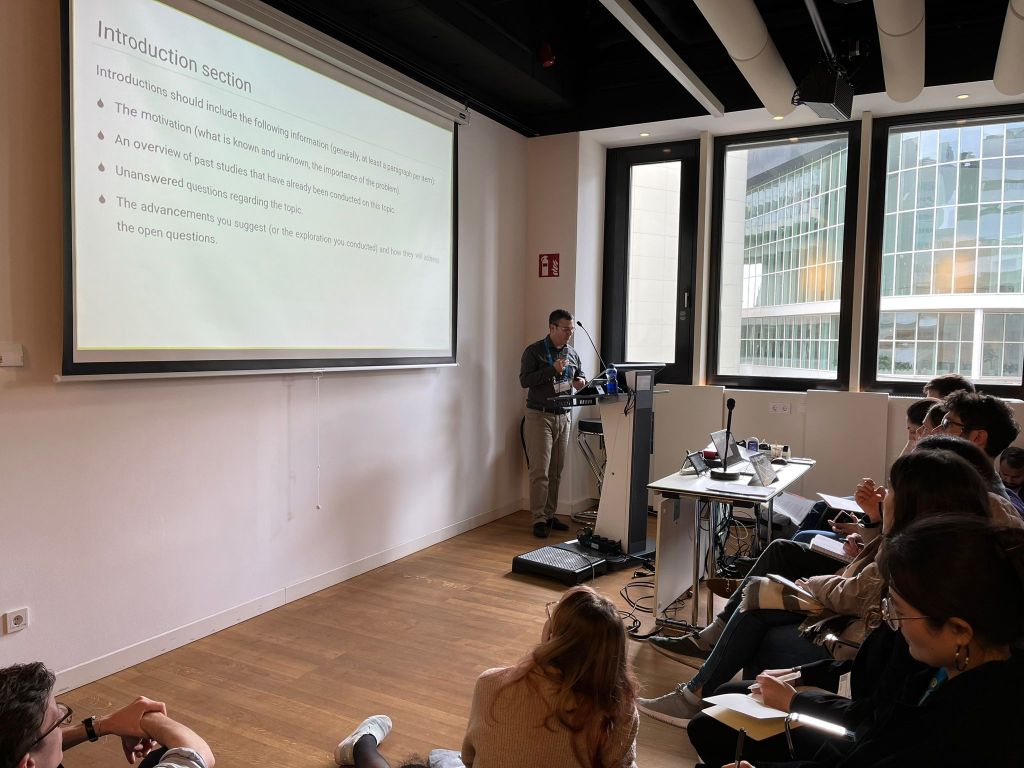
During the conference EGU23 held in Vienna, the Short Course “Meet the editors (1): how to write and revise your manuscript” was delivered. This short course gave early career scientists simple guidelines on writing about their work and increase the chance of publishing it.

Nadav Peleg, assistant professor at the University of Lausanne, was lecturer of this course. Dr. Peleg is an editor in the Hydrology and Earth System Sciences (HESS) journal and Journal of Hydrology.

Dr. Nadav Peleg
Continue reading
Posted in EGU, News | Tagged , | Comments Off on EGU23 Short Course – Meet the editors (1): how to write and revise your manuscript

EGU23 Short Course – DataViz: Visualise your data effectively and avoid common pitfalls

Visualisation of scientific data is an integral part of scientific understanding and communication. Scientists have to make decisions about the most effective way to communicate their results everyday. How do we best visualise the data to understand it ourselves? How do we best visualise our results to communicate with others? Common pitfalls can be overcrowding, overcomplicated plot types or inaccessible color schemes. Scientists may also get overwhelmed by the graphics requirements of different publishers, for presentations, posters etc.

During the conference EGU23 held in Vienna, the Short Course “DataViz: Visualise your data effectively and avoid common pitfalls” was delivered. This course was co-organized by the Young Hydrologic Society (YHS) and was designed to help scientists improve their data visualization skills in a way that the research outputs would be more accessible within their own scientific community and reach a wider audience.

Picture taken during the EGU23 short course.
Continue reading
Posted in EGU, News | Tagged , , , | Comments Off on EGU23 Short Course – DataViz: Visualise your data effectively and avoid common pitfalls

EGU23 Short Course – Hydroinformatics for hydrology: Introduction to large-scale hydrological modelling

One of the major challenges in water resources management today and in the coming future is reducing the risk related to extreme events, i.e. floods and droughts, mainly through a reliable flow prediction. Large-scale hydrological models have been widely proposed to gain insights into dominant water processes, quantify the role of human-water interactions, and identify emergent global patterns in a changing world.

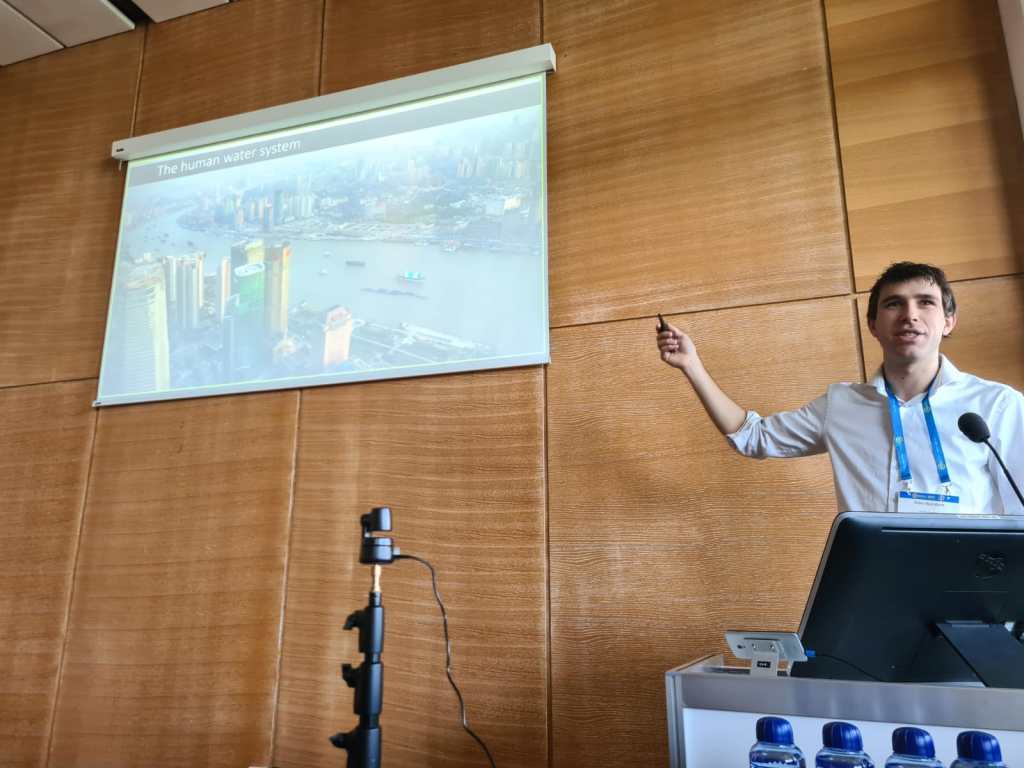
During the conference EGU23 held in Vienna, the Short Course “Hydroinformatics for hydrology: Introduction to large-scale hydrological modelling” was delivered. This course was co-organized by the Young Hydrologic Society (YHS). Dr. Niko Wanders from Utrecht University was the lecturer of this course.

Dr. Niko Wanders from Utrecht University.
Continue reading
Posted in EGU, News | Tagged , , | Comments Off on EGU23 Short Course – Hydroinformatics for hydrology: Introduction to large-scale hydrological modelling

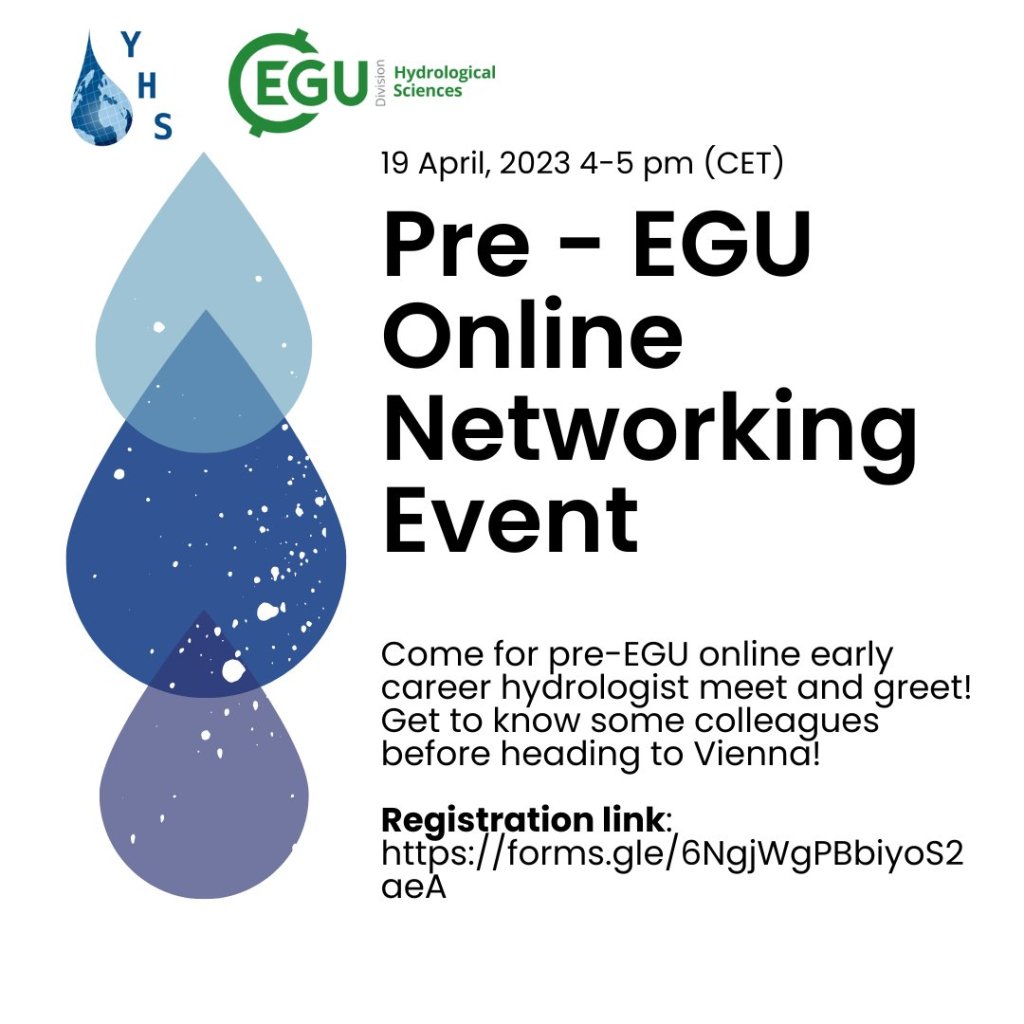
Pre-EGU Online Networking Event

Are you attending the EGU-GA for the first time? Or have you already been in Vienna and wanna share some tips with your colleagues?

Join our Pre-EGU Online Networking Event! Come for the annual Early Career Hydrology Meet and Greet between hydrologists from institutions around the world. Bring your drink of choice and get to know some of your colleagues before the upcoming EGU conference!

When: 19 April, 2023, 4-5pm CET

Registration: https://forms.gle/6NgjWgPBbiyoS2aeA

Posted in EGU, Events, News | Tagged , | Comments Off on Pre-EGU Online Networking Event