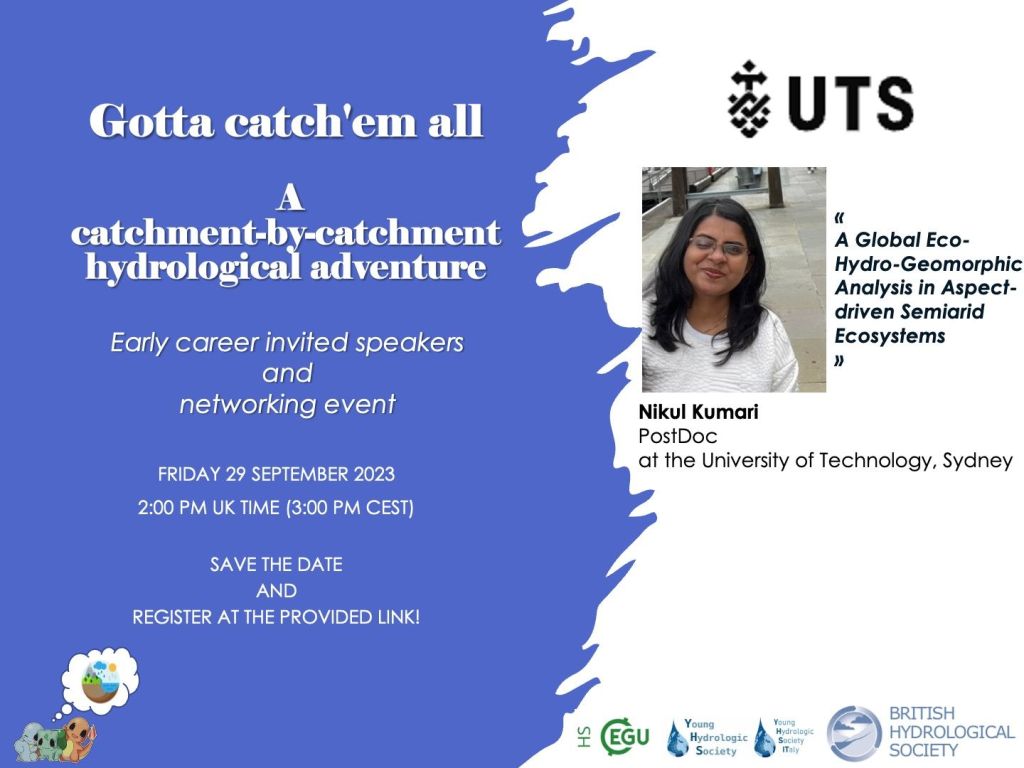
Join the British Hydrological Society and the Young Hydrologic Society for the September episode of “Gotta catch’em all”. Our speaker will be Nikul Kumari, PostDoc at the University of Technology, Sydney. She will present her work titled: “A Global Eco-Hydro-Geomorphic Analysis in Aspect-driven Semiarid Ecosystems”. Get your free online seat at https://events.teams.microsoft.com/event/05a5fad1-50c7-457c-82f8-5c4b2bc82f2d@b2e47f30-cd7d-4a4e-a5da-b18cf1a4151b to hear about the behaviour of deserts. Looking forward to seeing you there!
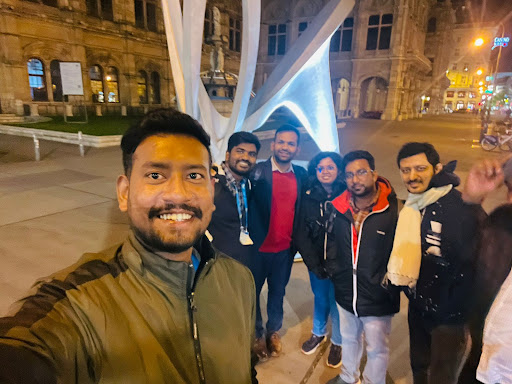
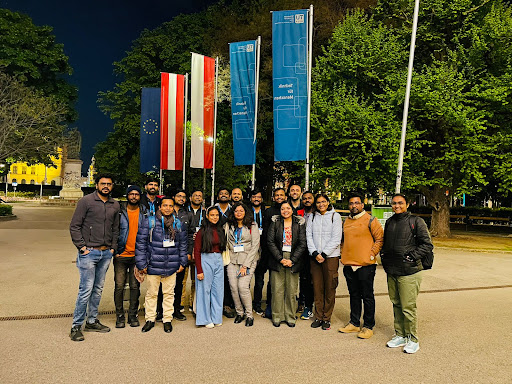
The idea for YHS India originated during the EGU 2023 conference. Dr Ankit Agarwal from IIT Roorkee noticed that several young hydrologists, including students pursuing Master’s and PhD degrees, postdoctoral fellows, scientists, and early-career Professors, were attending the conference from different universities in India. Surprisingly, despite their substantial presence, many of them were unaware of the various opportunities available at EGU. Additionally, there was a lack of connection among these participants as well as there is no formal framework to connect and collaborate. As a result, several young participants gathered to discuss how they could improve their connections, disseminate information, find PhD partners across borders, propose innovative ideas, and enhance their presentation skills.
Recognizing this gap, Dr. Ankit Agarwal (IIT Roorkee), Dr. Bramha Dutt Vishwakarma (IISC), Dr. Priyank Sharma (IIT Indore) and Dr. Vamsi Krishna Vema (NIT Warangal) realized the need for a platform that would bring together young hydrologists in India and foster collaboration and knowledge exchange between them. Indeed, the Young Hydrologic Society (YHS) is a bottom-up initiative to stimulate the interaction and active participation of young hydrologists within the hydrological community. Founded in October 2012 the YHS is currently run by a team of enthusiastic MSc’s, PhD’s and post-doc’s from several universities across Europe.
Dr. Ankit and many interested students had a meeting with Dr Lina Stein to initiate the YHS India Chapter. The membership is free and open to all interested young hydrologists. If you are interested, you can register here for the mail distributor.
A Streams of Thought contribution by Hayat Nasirova
The Caspian Sea (CS) is the largest lake on Earth. It is located at the intersection of Europe and Asia. It is called “sea” because it has an ocean-type earth layer at the bottom as being a remnant of the Tethys Ocean and has the dimensions of a sea. The water level is variable, currently it is approximately -28 meters below the ocean level.
The current worry of some hydrologists is whether the CS will follow the same fate as the Aral lake. NASA’s Global Water Monitor, which uses radar altimetry data collected by multiple satellites, shows changes in water levels in the CS since the mid-1990s (Figure 1).
Figure 1: a) Regions affected by severe drying as projected for 2080–2099 with major lakes located in the region indicated in bright red. Many of these lakes are already experiencing drying. Map data: Google Earth, Landsat/Copernicus (data from SIO/NOAA, U.S. Navy, NGA, GEBCO, IBCAO, USGS). b) Impact of Caspian Sea Level(CSL) projections of −9 m and −18 m at the end of the twenty-first century. Red regions fall dry.