STAHY 2019

by Svenja Fischer

The tenth edition of the STAHY International Workshop, STAHY 2019, is organized by the International Commission on Statistical Hydrology (ICSH) of the International Association of Hydrological Sciences (IAHS), in cooperation with the Hohai University. It will be held in Nanjing, China betweeb 19-20 October 2019 at the College of Hydrology and Water Resources, Hohai University. The potential participants could submit 1-page abstract through the IAHS-Copernicus Abstract Management System (will open soon).

STAHY 2019, similarly to previous editions (STAHY 2018 in Adelaide, South Australia & STAHY 2017 in Warsaw, Poland), will focus on statistical methods for hydrological applications. The topics range from big data to extremes and climate change but also prediction and uncertainty. This diversity makes this conference so interesting. I participated in this conference twice and I can highly recommend the participation.

Due to the small community with about 100 people, the conference is very familiar and one gets in touch with the other researchers easily. It has been a great opportunity for me as an early career scientist to talk to experts about my research. On the day before this workshop (Oct 18, 2019), also an Early Career Course will be held as well as a short reception for the early career members. Further information can be found at: http://www.stahy2019.org.

I hope to see many of you at the STAHY 2019!

About the author:
Svenja Fischer (Svenja.fischer@rub.de) is a Post-Doc at the Ruhr-University Bochum working on flood statistics and Early Career Committee Representative for the IAHS (@IAHS_AISH)  International Commission on Statistical Hydrology.

Posted in IAHS, News | Tagged | Comments Off on STAHY 2019

Hydrology + Vienna = EGU 2019

EGU 2019 – Call for ABSTRACTS
Abstract submission deadline: Jan 10, 2019 (13:00, CET)
Financial support application deadline: Dec 1, 2018

As we are getting closer to say goodbye to 2018, the next European Geosciences Union General Assembly is seen on the horizon. Since 2005, Vienna has been the most popular destination during lovely spring time for many hydrologists all over Europe (and all around the world, one can say looking at the statistics from EGU 2018). There is no doubt that the EGU GA 2019 (7–12 April 2019) will be no exception considering the highly rich programme of the Hydrological Sciences (HS) Division (>120 HS-led sessions) for EGU 2019! The sessions can be browsed by selecting “Hydrological Sciences” in the programme groups. You can submit abstracts until the deadline 10 January 2019, Monday (13:00 CET).  The call for abstracts can be read here.

Continue reading

Posted in EGU, News | Tagged , | Comments Off on Hydrology + Vienna = EGU 2019

Broader Impacts Can Bring Hydrological Processes to Life

A –Streams of Thought– contribution by  John Van Stan & Jan Friesen.

Writing my first full science proposal in a new tenure-track position was challenging but, honestly, most sections flowed smoothly from my fingertips. The motivation, background, research approach, hypotheses, methods, and even project and data management plans fit snuggly together beneath the overarching question: Will forests interact differently with rainfall along a natural-to-urban continuum? Then, confidently, I wrote “Broader Impacts” in bold, sipped my single-origin third-wave coffee, and stared blankly at the blinking text cursor. Every other blink interrupted my stream-of-thought until, after mere minutes, the cursor had elevated itself from nuisance to arch-nemesis. It became clear that each blink was a taunt as it shed its disguising vowel for a more rancorous one, becoming the villainous “Curser.” Unluckily, I knew this villain all too well. I also knew that I had to act fast, before the Curser’s mocking winks dissolved my thoughts to mush! With astonishing rapidity, my fingers fluttered out several sentences, forcing the Curser to retreat down the page. There it sat, one line below my newest paragraph, derisively staring at this anemic assembly of platitudinous promises. Like a bot trained by reading innumerable “Broader Impacts” sections, I had spewed out some vanilla text pudding that blandly promised to “present and publish findings,” “integrate work into my courses,” “extend current scientific theory,” and so on …list abbreviated as to not bore the reader any more than was necessary. I locked an unflinchingly open stare with the Curser’s unflinchingly blinking slash. It was clear: The battle for unique broader impacts had begun! Continue reading

Posted in Streams of Thought | Tagged | Comments Off on Broader Impacts Can Bring Hydrological Processes to Life

YHS Collection on “Unexpected Results in Hydrology”

by Caitlyn A. Hall, Andrea Popp, Hannes Müller, and Tim van Emmerik

Understanding and learning from unexpected results is a fundamental element of science. Different names exist for these results, e.g., failures, obstacles, or unexpected results. Although all of these names sound unexpected, they are important for the understanding of processes, developing and testing of theories, and identifying pitfalls and possible dead-ends in science.

By carefully designing and conducting experiments with some level of trial-and-error, researchers eventually find results that will be published in peer-reviewed scientific journals. Paradoxically, we typically only publish the successful tests and their results. What comes of the weeks to months of critical information that led to this successful experiment? It usually remains in the dark. However, not sharing unsuccessful iterations or unexpected results — defined here as experiments that do not adequately confirm an accepted hypothesis, despite sound and careful experimental design, planning, and execution — along the way prevents others to learn from these endeavors (Nature Editorial, 2017).

In the past, many philosophers, including Popper (1963) and Chalmers (1973), have emphasized that science can only advance by learning from mistakes. Moreover, recent literature in various fields elaborate on the many benefits and values of publishing unexpected results and call upon the scientific community to nurture their dissemination (e.g., Andréassian, et al., 2010; Schooler, 2011; Matosin et al., 2014; Granqvist, 2015; Goodchild van Hinten, 2015; Boorman, et al., 2015; PLOS collections; 2015, 2017; Nature Editorial, 2017). Despite the various calls to report such results and the frequency they occur in the labspace, they are still underrepresented in most fields of our current publication system. The reasons can be manifold such as, a lack of incentive (no scientific reward) or the fear of a negative reputational impact.

So, why should you report your failed approaches and unexpected findings?

By reporting on unexpected findings, we can do the following:

  • Decrease the currently existing publication bias towards positive results
  • Save time and resources of other scientists exploring same/similar hypotheses and/or approaches
  • Increase transparency and reproducibility of our studies
  • Share all findings of publicly funded projects

How and where can you share your unexpected findings?

You can share your unexpected results at:

  • Special journal issues
  • Dedicated sessions at conferences
  • Platforms (e.g., Researchgate)
  • Supplementary material of your paper
  • Blog posts

We aim to stimulate this discussion via the new Young Hydrologic Society collection “Unexpected Results in Hydrology”. We want to instill a positive perception to change the way in which the scientific hydrologic community value unexpected and negative results including individual researchers, scientific societies, funding agencies, and publishers. Therefore, we invite researchers to report their negative and unexpected results, such that we are able to holistically advance science – by sharing our failures, not only our successes.

Reporting on such findings should include the following components in a maximum of 3,000 words: 1) an original research objective and expected results, 2) a brief summary of experimental design and methods, 3) discussion on the experimental results and challenges, including images and/or figures, and possibly 4) lessons learned and the path forward.

After a peer-review done by the editors of this collection, the post will get a DOI and will be visible on the YHS website and on a dedicated ResearchGate project site. On ResearchGate we invite discussions on published submissions such that the authors can receive feedback to facilitate new insights from the scientific community. Upon enhancing their previous analysis or coming to new conclusions, we welcome resubmissions by the original authors.

References
Andréassian, V., Perrin, C., Parent, E. and Bárdossy, A. (2010). Editorial – The Court of Miracles of Hydrology: can failure stories contribute to hydrological science? Hydrol. Sci. J. 55(6), 849–856.
Boorman, G.A., Foster, J.R., Laast, V.A. and Francke, S. (2015). Regulatory Forum Opinion Piece: The Value of Publishing Negative Scientific Study Data, Toxicol Pathol, 43(7), 901-906. doi: 10.1177/0192623315595884
Chalmers, A.F. (1973). On Learning from Our Mistakes, The British Journal for the Philosophy of Science (Oxford University Press) 24(2), 164-173.
Goodchild van Hilten, L. (2015).Why it’s time to publish research “failures”-Publishing bias favors positive results; now there’s a movement to change that. Elsevier Connect.
Granqvist, E. (2015). Why science needs to publish negative results. Elsevier Connect
Matosin, N., E. Frank , M. Engel, J.S. Lum, and Newell, K.A. (2014). Negativity towards negative results: a discussion of the disconnect between scientific worth and scientific culture. Disease Models and Mechanisms. 7(2): 171–173. doi: 10.1242/dmm.015123
Nature Editorial (2017). Nurture negatives, Nature 551, 414, doi: 10.1038/d41586-017-07325-2
PLOS Collections (2015). Positively Negative: A New PLOS ONE Collection focusing on Negative, Null and Inconclusive Results, PLOS ONE Community Blog
PLOS Collections (2017). Negative Results: A Crucial Piece of the Scientific Puzzle, PLOS ONE Community Blog
Popper, K. (1963). Conjectures and Refutations: The Growth of Scientific Knowledge, Routledge Classics, London and New York
Schooler, J. (2011). Unpublished results hide the decline effect, Nature 470, 437, doi:10.1038/470437a
Posted in News | Comments Off on YHS Collection on “Unexpected Results in Hydrology”

Call for Applicants — IAHS Early Career Committee

Early Career scientists make up a significant amount of our community, creating an opportunity to include a new generation of hydrologists as active contributors to IAHS. Early Career scientist involvement in geoscientific organizations has rapidly increased over recent years. Organizations such as the American Geophysical Union (AGU) and the European Geosciences Union (EGU) have adopted Early Career representation in committees, board and executive committees.

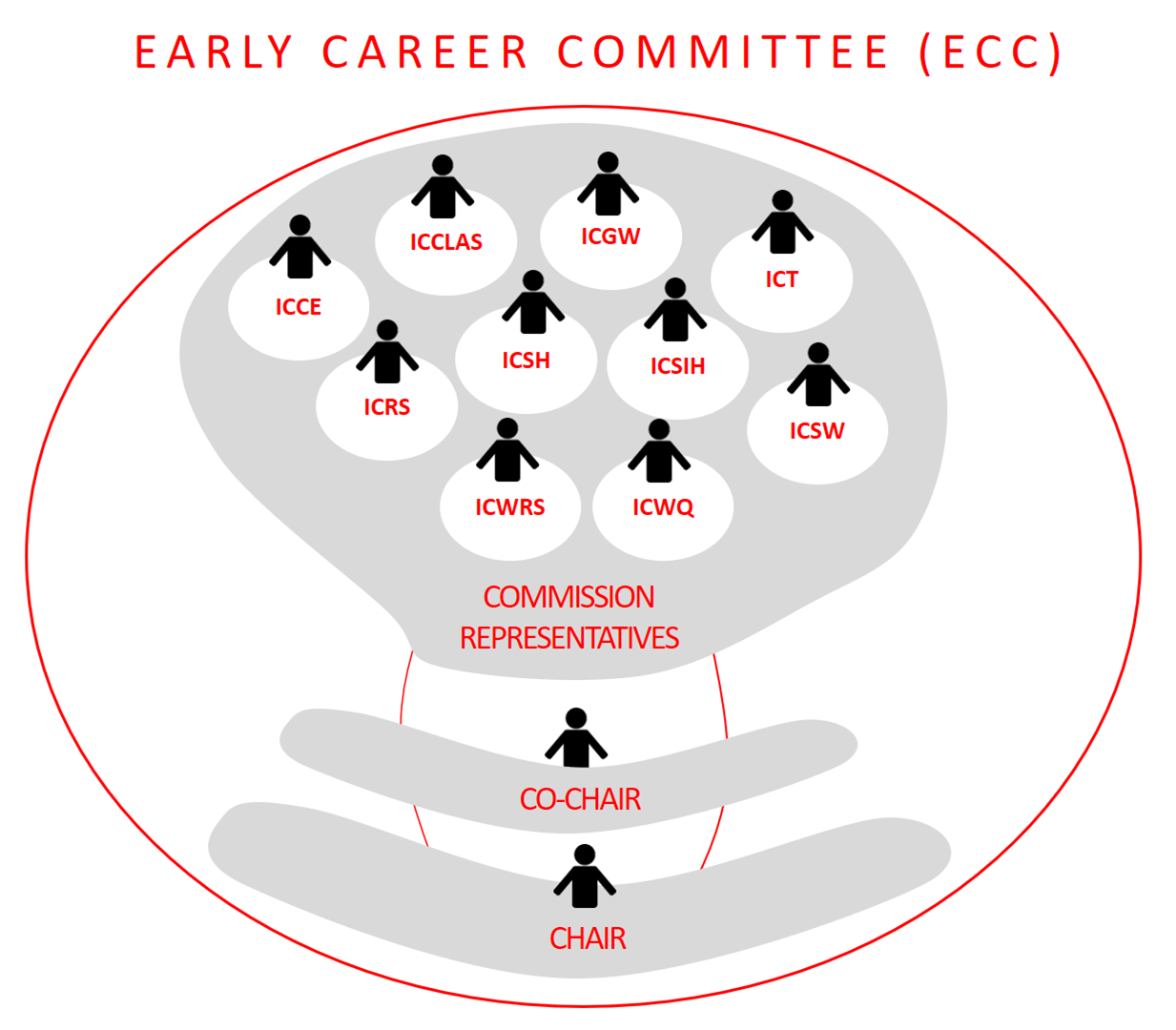
During its Bureau Meeting in July 2017 (held in Port Elizabeth, South Africa following the IAHS Scientific Assembly 2017), IAHS decided to strengthen its Early Career scientist representation to enable more active participation of those members within IAHS Commissions and Working Groups. To achieve this goal, in line with the proposal submitted by Tim van Emmerik and Nilay Dogulu—and approved by the Bureau members—IAHS will establish an Early Career Committee (ECC) consisting of the Early Career Representative of each IAHS Commission plus a chair and co-chair. The IAHS definition of Early Career embraces scientists up to 5 years after completion of the PhD (allowing for an extra year per child for parents if they took parental leave).

IAHS Early Career Committee (ECC) structure

The ECC is aimed at representing the Early Career membership of the IAHS at the highest level, and within each Commission. ECC members are dedicated to fostering dialogue between Early Career members, and between current and future generations of hydrologists. The ECC chair will be appointed by the IAHS Bureau and will join the IAHS Bureau meetings as an observer. The chair will be encouraged to also be an active member of the Young Hydrologic Society to assure strong connections with other Early Career initiatives in the hydrological community.

Continue reading

Posted in IAHS, News | Tagged , | Comments Off on Call for Applicants — IAHS Early Career Committee